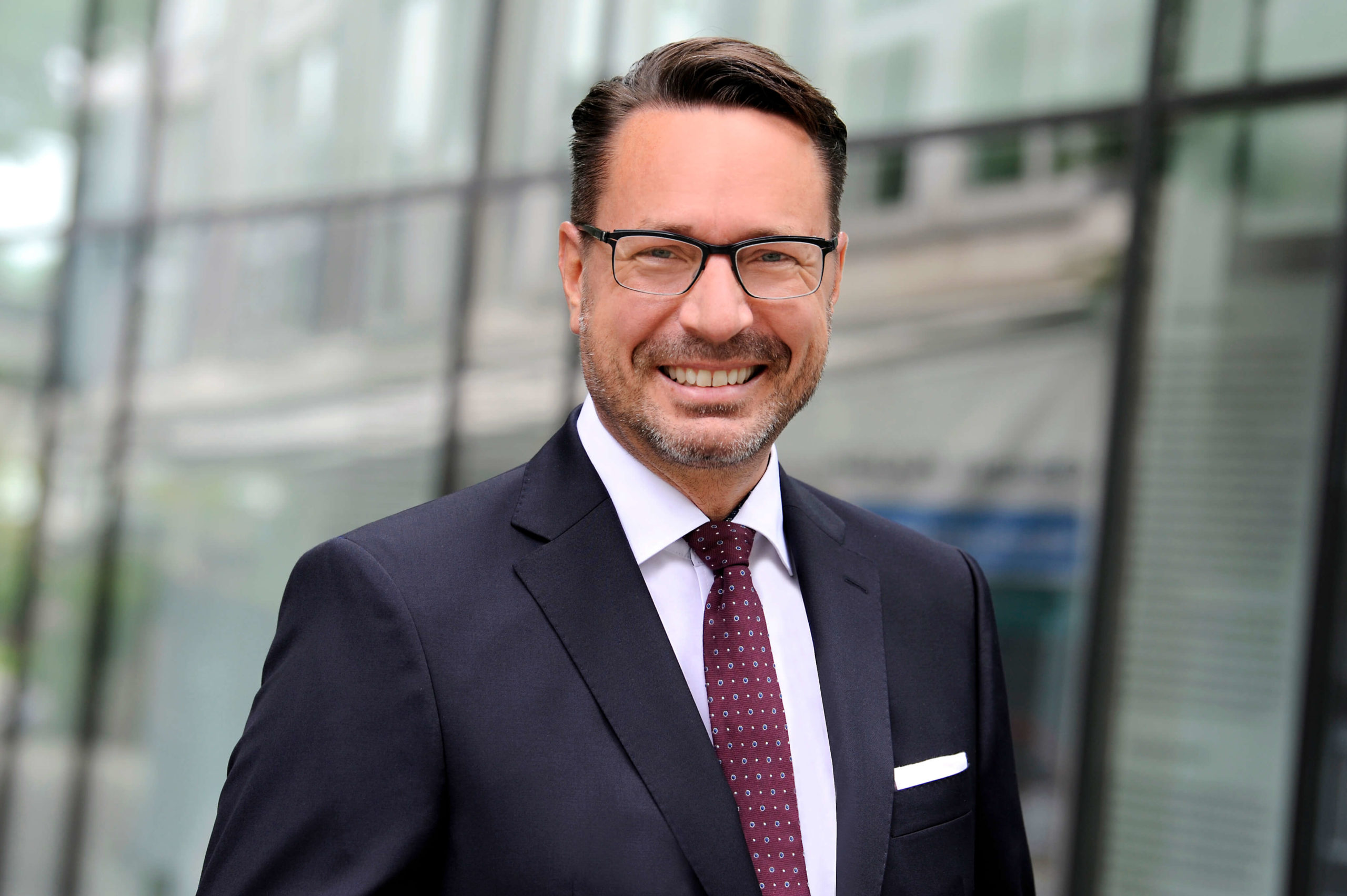
· Chair
Prof. Dr. Peter Picht, LL.M. (Yale)
Prof. Dr. Peter Picht studied law in Munich, did his PhD at Munich University/the Max Planck Institute, and holds a LL.M. degree from Yale Law School. He has been working, i.a., in the EU Commission DG for Competition and as a Senior Research Fellow with the Max Planck Institute for Innovation and Competition. Prof. Picht now holds a chair for Commercial Law at the University of Zurich and is head of the University Centre for Intellectual Property and Competition Law (CIPCO). He remains affiliated to the Max Planck Institute as a Research Fellow and is an Of Counsel with the law firm Schellenberg Wittmer. Prof. Picht academic teaching and writing, as well as his counseling activity, focus on intellectual property law, competition law, international private and procedural law.
· Vice Chair
Dr. Claudia Feller, LL.M.
Claudia Feller is an attorney at law at Peterreins Schley Patent- und Rechtsanwalte. After completing her legal clerkship at the Higher Regional Court of Munich and the German Embassy in Madrid, she worked for several years as Academic Associate at the Chair for Business Law and Intellectual Property at the Technical University of Munich and as attorney at two international law firms. She obtained a doctoral degree on the topic of FRAND-Declarations with a scholarship of the Max Planck Institute for Innovation and Competition. Claudia also holds a master degree in European and International Business Law (LL.M.eur.) from the Ludwig-Maximilians-University, Munich and a master degree in Intellectual Property Law and Policy (LL.M.) from the University of Washington, Seattle.
· Initiator
Dan Bauer
Dan Bauer is a German entrepreneur, infrastructure architect, and strategic thinker dedicated to the modernization of Germany. Through his initiative Mission TOP 5, he pursues the goal of positioning Germany among Europe's five most advanced economies. His work focuses on digital sovereignty, state modernization, and institutional renewal. Dan is the author of several specialist books, a Senator of the Economy, a member of the DIN standardization committee, and the initiator of the digital sovereignty standard EDSO. Most recently, he authored the paper Digital Agenda for Germany 2025-2028, which sets out concrete recommendations for action to the Federal Government. He combines entrepreneurial experience with a long-term vision: building the structures, standards, and digital foundations a modern Germany needs to stay competitive, sovereign, and future-ready.
· Executive Board
Raffael Probst
Raffael Probst is a commercial mediator and strategy consultant in Berlin and Frankfurt am Main. Previously, he worked for the Federal Ministry for Food and Agriculture and acted as managing director of the Munich Center for Dispute Resolution (MuCDR). Raffael teaches negotiation and mediation at the LMU Munich and the Leibniz Universität Hannover. He was awarded for an entrepreneurial project by the Federal Ministry for Economic Affairs and Energy. His legal education includes stays in Munich, Athens and New York.
· Executive Board
Dr. Peter R. Slowinski, J.S.M. (Stanford)
Dr. Peter R. Slowinski is Assistant Professor and Project Lead at Adam Mickiewicz University in Poznan (Poland) as well as an affiliated research fellow at the Max Planck Institute for Innovation and Competition (MPI) in Munich. In Poznan, he is a member of the chair for European Law and leads a grant-funded research project on legal questions relating to artificial intelligence. In Munich, he is collaborating with the research teams of the MPI on the Unitary Patent and on standard essential patents. From 2014 to 2016 he has been working as an attorney in the Munich office of a US law firm with a focus on patent litigation and technology focused transactions. He wrote his doctoral thesis on Dysfunctional Effects in Patent Enforcement. Peter studied at the Universities of Passau and Munich in Germany, Cardiff in Wales and the Stanford Law School in the USA. At Stanford he conducted a large-scale study on patent mediation in Germany and obtained a Master of the Science of Law (J.S.M.) as part of the Stanford Program in International Legal Studies (SPILS).
· Executive Board
Klaus Haft
Klaus obtained his physics degree in 1997, became an attorney in 2002, and advises on patent infringement litigation cases, subsequent litigation regarding damages as well as licenses in the entire area of intellectual property law, particularly in the fields of patents. His particular focus is on electronics, semiconductors, software, standards, optics, electrics and general mechanics. He studied in Würzburg and Munich. He completed his degree thesis in 1997 as a member of the Spin Muon Collaboration at the European Center for Particle Physics, CERN, in Geneva, Switzerland. Parallel to his studies, he started in 1990 to specialize in intellectual property law and, in particular, in patent law. Klaus is Past President and member of the advisory board of the European Patent Lawyers Association (EPLAW) as well as board member and Past-President of the Licensing Executives Society (LES) Germany.
· Finance
Anna-Lena Klein
Anna-Lena Klein is a presiding judge at the Regional Court Munich I and a legally qualified judge at the Milan section of the central division of the Unified Patent Court. She has served as a judge at the Regional Court Munich I since 2014 and has worked in the field of IP since 2018. Anna-Lena was a member of the 7th division and the 21st division, both dealing mainly with patent infringement cases. She was also a member of the 33rd division, dealing mainly with trademarks and unfair competition cases. Prior to her appointment as judge at the Regional Court Munich I, Anna-Lena completed a secondment to the Bavarian State Chancellery from 2011 to 2014. From 2009 to 2011 she served as a judge at a local district court in Bavaria and as a public prosecutor in Munich. Since 2020, she has served as a mediator, especially in the field of IP law.
· Executive Management
Lisa Glaser
Lisa works as a legal assistant in the patent litigation department of an IP law firm. After studying at Fremdspracheninstitut der Landeshauptstadt München (FIM), where she graduated as a foreign-language correspondent and later as translator specializing in economics, Lisa worked as an IP prosecution specialist and patent translator at a Munich-based patent law firm.